



Rome as Archive
There's a way to walk through Rome that has nothing to do with tourism. It's slower, more meandering. It looks up instead of straight ahead. It stops in front of a doorway on Via Giulia not to enter, but to study the frieze above the arch — the sequence of leaves, the proportion between solid and void, the way the stone still bears the mark of the chisel.
Gaude Studio was born from that way of walking.

An archive built on foot
Before becoming a jewel, every motif we use was found. Photographed. Hand-drawn or digitally extracted. Placed in an archive that grows every time we leave the studio.
It's not academic research. It's closer to what Renaissance architects did when they walked among the Roman ruins with a notebook — not to copy, but to understand the grammar of those forms. The proportion, the rhythm, the decorative logic behind each element.

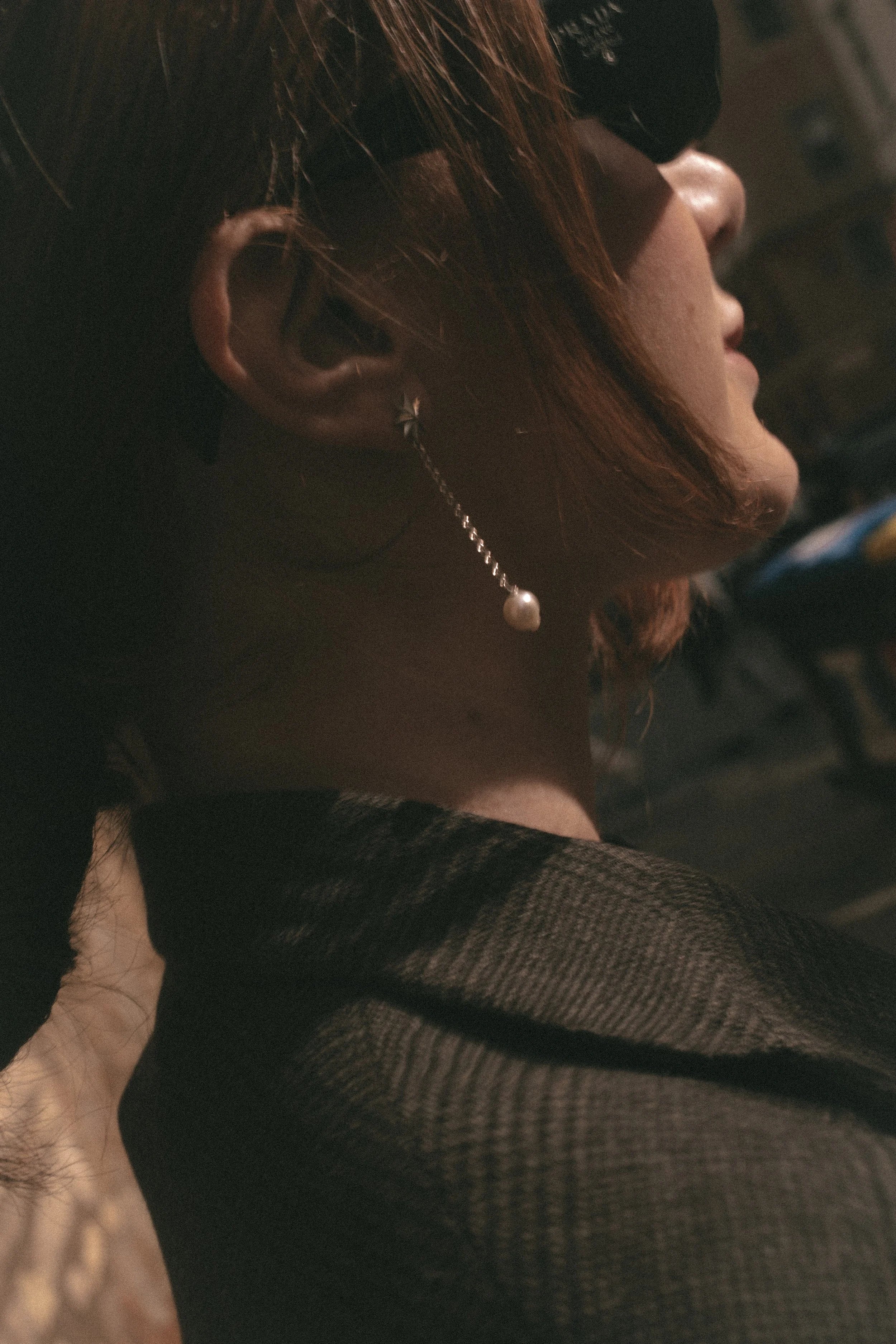
The star that appears on an earring from the collection comes from an arch in Trastevere. The fluting of a ring comes from a column section in a palace courtyard. The seal of a pendant reproduces a motif we found on a 19th-century facade in the Prati district.
None of these pieces are reproductions. They are reductions — the motif brought to its most essential form, translated into 925 silver, made wearable.

The Renaissance method
There's a word we often use to describe what we do: reinterpretation. Not imitation, not nostalgia. The same intellectual gesture of the Renaissance — looking at the remains of an ancient world to build something new.
Brunelleschi studied the Pantheon not to build another Pantheon, but to understand how to cover a huge space without it collapsing. We study a cornice not to reproduce it in miniature, but to understand why that shape works — why the eye finds it right, proportionate, necessary.
Every piece in the collection carries that reasoning within it, even if it's not visible.

Layered Rome
Rome is a city that doesn't erase — it layers. Beneath the Baroque is the Renaissance, beneath the Renaissance is the Middle Ages, beneath the Middle Ages is antiquity. Each era has left its mark on the facades, the doorways, the cornices.
For us, this is the working material. Not postcards, not the Colosseum — the details that the city only shows to those who truly know it and know where to look.
It's an inexhaustible source. And it belongs to no one in particular — it belongs to anyone who can see it.


→ See the complete collection - LARES COLLECTION
Leave a comment
All comments are moderated before being published.
This site is protected by hCaptcha and the hCaptcha Privacy Policy and Terms of Service apply.